If you're a Florida homeowner, understanding the state's roof replacement regulations could save you thousands of dollars and major headaches. The rules have evolved significantly over the past few years, and 2025 brings some important updates that every property owner should know about.
Let's break down everything you need to understand about Florida's current roof replacement requirements, insurance protections, and building code standards.
The Game-Changing 25% Rule: What's Different Now
Florida's approach to roof replacement fundamentally changed with Senate Bill 4-D, which became effective in May 2022. This legislation created a two-tier system based on when your roof was originally built.
For Roofs Built After March 1, 2009:
If your roof was constructed or replaced after March 1, 2009, and complies with the 2007 Florida Building Code or any newer version, you're in luck. Even if storm damage affects more than 25% of your roof, you only need to repair or replace the damaged sections. The entire roof doesn't require replacement.
This is a huge win for homeowners with newer roofs. Previously, any damage exceeding 25% of the total roof area triggered a complete roof replacement requirement, regardless of the roof's age or condition.
For Roofs Built Before March 1, 2009:
If your roof predates March 1, 2009, the original 25% rule still applies. When damage exceeds 25% of your roof's total area within a 12-month period, you must replace the entire roofing system. However, there's an important exception: if you've had a compliant roof replacement since 2009, your roof falls under the newer, more lenient rules.
Understanding the Building Code Compliance Factor
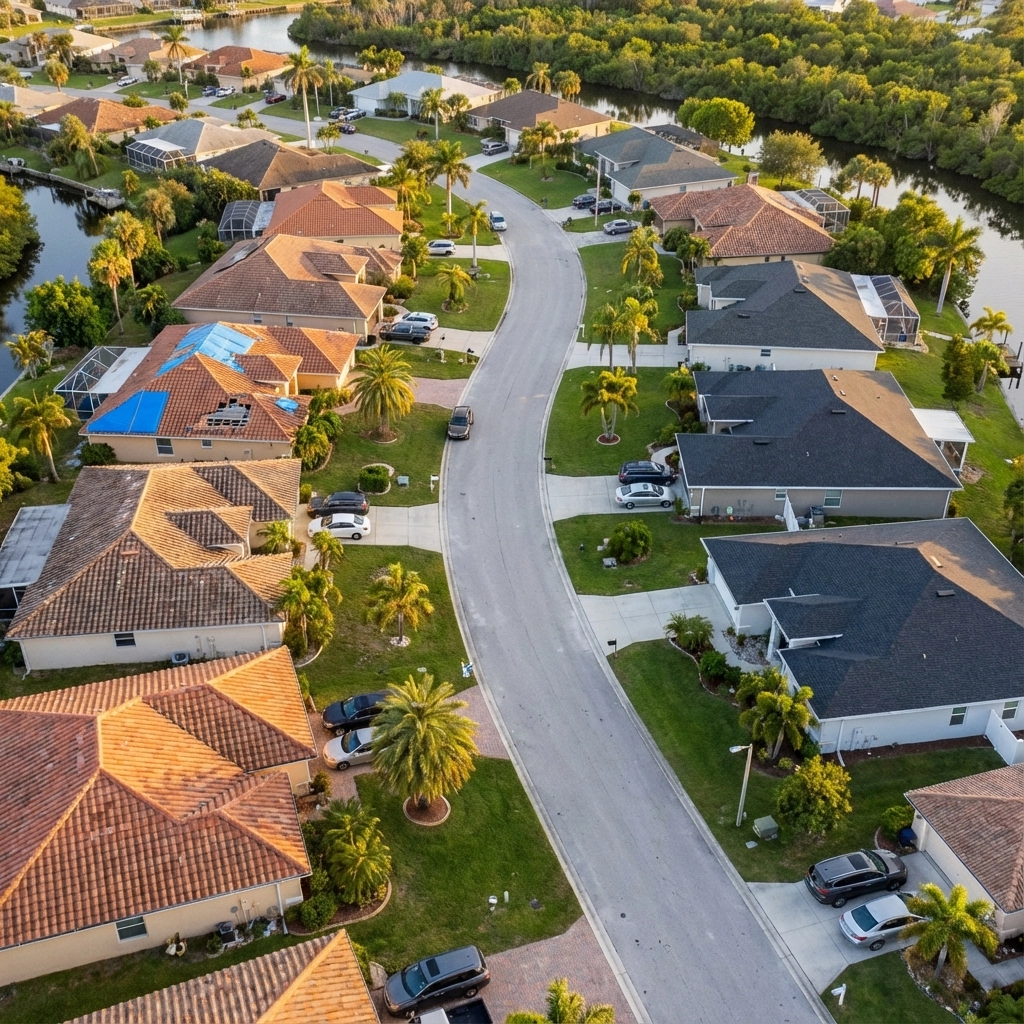
The key determining factor isn't just the installation date: it's whether your roof meets the 2007 Florida Building Code or later standards. These codes introduced enhanced wind resistance requirements, improved fastening methods, and better underlayment specifications.
If you're unsure about your roof's compliance status, a professional inspection can determine whether your roof meets current standards. This information is crucial for both insurance claims and future replacement planning.
Insurance Protections: The 15-Year Rule
Florida lawmakers recognized that insurance companies were unfairly penalizing homeowners with older roofs. Senate Bill 2D introduced important protections that remain in effect for 2025.
No Denial for Roofs Under 15 Years:
Insurance companies cannot deny coverage or refuse to renew your policy solely because your roof is less than 15 years old. This protection gives homeowners breathing room and prevents arbitrary coverage denials based on roof age alone.
The 15+ Year Inspection Option:
For roofs that are 15 years or older, insurers must provide you with an opportunity to demonstrate your roof's condition through a professional inspection. If the inspection confirms your roof has at least five years of useful life remaining, the insurance company cannot force immediate replacement as a condition of coverage.
This provision is particularly valuable for homeowners who have well-maintained roofs that may be chronologically older but structurally sound.
2025 Building Code Updates: What's New
The Florida Building Code continues to evolve, with 2025 bringing several important updates that affect roof replacement projects.
Enhanced Underlayment Requirements:
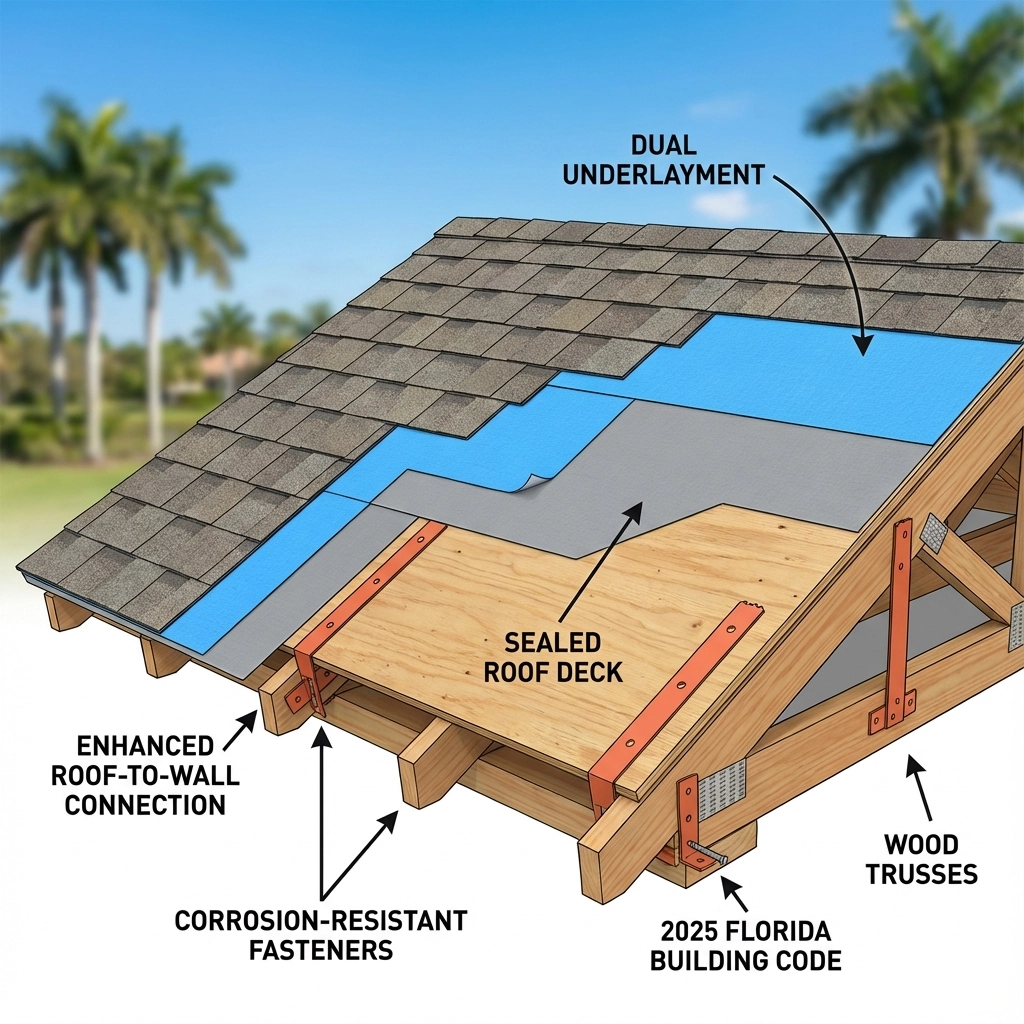
New installations must include dual layers of underlayment for metal roofing, asphalt shingles, slate, and mineral-surfaced roll roofing. This requirement significantly improves water resistance and helps prevent leaks during severe weather events.
Improved Fastening Standards:
The updated code includes enhanced nail penetration requirements and specifications for fastener placement. These changes ensure better wind resistance and reduce the likelihood of shingle blow-off during hurricanes and severe storms.
Sealed Roof Decks:
All new roof installations must feature properly sealed roof decks and enhanced roof-to-wall connections. These improvements help create a more robust barrier against wind and water intrusion.
Materials Standards:
The 2025 code emphasizes improved materials standards, particularly regarding wind and impact resistance ratings. This helps ensure that new roof installations can better withstand Florida's challenging weather conditions.
Insurance Industry Changes for 2025
While homeowners gained important protections, insurance companies also received expanded authority in certain areas. Understanding these changes helps you prepare for potential claim situations.
Stricter Documentation Requirements:
Insurance companies now require more detailed documentation for roof replacement claims. This includes professional inspections, detailed photographs, and comprehensive damage assessments. Having proper documentation before you need it can streamline the claims process.
Enhanced Authority for Claim Denials:
Insurers have stricter authority to deny claims for full roof replacements on older roofs that don't meet current standards. This makes it even more important to understand whether your roof complies with current building codes.
Permit and Documentation Requirements
Any major roofing work in Florida requires proper permits and documentation. Here's what you need to know:
When Permits Are Required:
- Complete roof replacement
- Roof repairs exceeding 25% of the roof area (for pre-2009 roofs)
- Any structural modifications
- Installation of new roof decking
Essential Documentation:
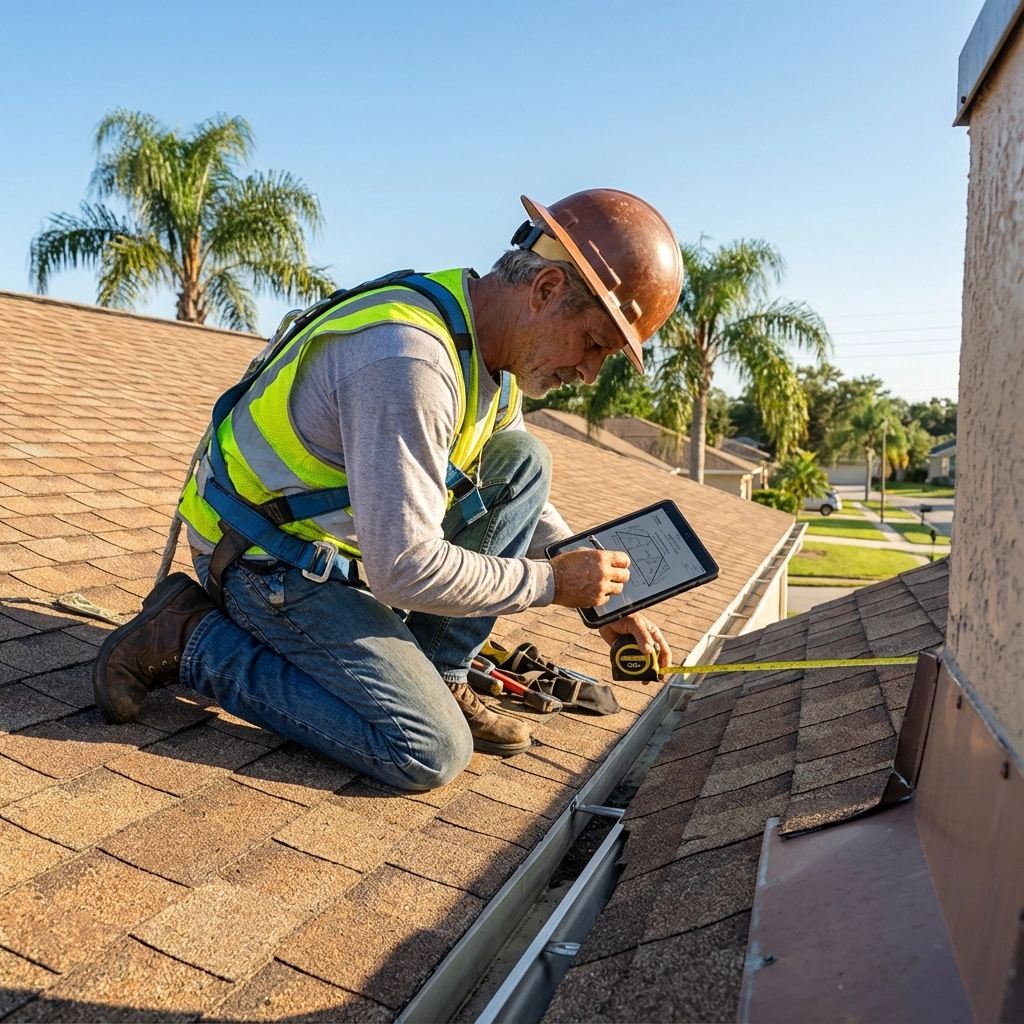
Keep detailed records of your roof's age, installation date, and any previous repairs or replacements. This documentation proves invaluable for insurance claims and helps determine which rules apply to your specific situation.
Professional Inspections:
Consider scheduling annual professional roof inspections, especially before hurricane season. These inspections can identify potential issues early and provide documentation of your roof's condition for insurance purposes.
Practical Steps for Florida Homeowners
Know Your Roof's History:
Determine when your roof was installed or last replaced. If it was after March 1, 2009, and meets building code requirements, you benefit from the more lenient replacement rules.
Review Your Insurance Policy:
Understand your coverage limits, exclusions, and claim procedures. Know what documentation your insurer requires and have it readily available.
Schedule Pre-Storm Inspections:
Don't wait until after a storm to assess your roof's condition. Regular inspections help identify issues early and provide baseline documentation for future claims.
Maintain Detailed Records:
Keep receipts, permits, inspection reports, and photographs of your roof. This documentation supports insurance claims and helps demonstrate compliance with building codes.

Working with Qualified Professionals
The complexity of Florida's roofing regulations makes it essential to work with qualified, licensed professionals who understand current requirements.
Choosing the Right Contractor:
Look for contractors who are fully licensed, insured, and knowledgeable about current Florida building codes. They should be able to explain which rules apply to your specific situation and ensure all work meets current standards.
Understanding Compliance:
A qualified contractor can assess whether your existing roof meets current building code requirements and advise you on the most cost-effective approach for repairs or replacement.
Planning Ahead: Storm Season Preparation
Florida's hurricane season runs from June through November, making preparation crucial for protecting your investment.
Pre-Season Roof Inspection:
Schedule professional inspections before storm season begins. Address any identified issues promptly to prevent minor problems from becoming major damage during severe weather.
Insurance Claim Preparation:
Have all your roof documentation organized and easily accessible. This includes installation records, previous inspection reports, and current photographs of your roof's condition.
Emergency Contractor Relationships:
Establish relationships with qualified roofing contractors before you need emergency services. After major storms, qualified contractors are in high demand and may not be immediately available.
The Bottom Line
Florida's 2025 roof replacement rules offer significant benefits for homeowners with newer roofs while maintaining important safety standards for all properties. Understanding these regulations helps you make informed decisions about roof maintenance, repairs, and replacement timing.
The key is knowing your roof's age, compliance status, and insurance coverage details. With proper planning and documentation, you can navigate Florida's roofing requirements confidently and protect your most important investment: your home.
Whether you're dealing with storm damage, planning a replacement, or simply maintaining your roof, staying informed about current regulations ensures you make the best decisions for your specific situation. When in doubt, consult with qualified professionals who understand the nuances of Florida's evolving roofing landscape.


